Lies of P got me thinking about inspiration versus imitation. . .
As I booted up Lies of P, a new soulslike from South Korean developer/publisher Neowiz, I wondered what it was that had brought me to this moment. Why had I been so excited about another derivatively difficult third-person RPG that I ran out and bought it as soon as it arrived on store shelves? I already have a backlog that could fill a walk-in closet, and my blog doesn’t only revolve around current releases. I play whatever I want whenever I want to play it (this isn’t my job, after all). So, why did I want to play Lies of P so badly, a game with no proven predecessor to vouch for its guaranteed quality? Two words: no, wait, I mean one word that sounds like two: Bloodborne. Back when I was returning to my love of gaming after a hiatus during college, Bloodborne was one of two games I initially bought alongside my purchase of a PlayStation 4 (the other being Doom) and is one of two reasons why I haven’t taken another hiatus since (the other reason being Doom). Its impact was immense, especially considering I had never played Demon’s Souls or Dark Souls prior to visiting Yharnam, a Victorian city dripping in viscous, viral blood. Everything about the game, from its cruel brutality to its mystifying narrative and epic, ghastly boss design felt entirely unfamiliar in the most enthralling way. It’s never gotten a sequel, a sad reality that fans of FromSoftware will continue to lament until the (hopefully inevitable. . .?) announcement comes. I’d be lying if I said that I predicted a spiritual successor of sorts to arrive in the form of a dark Pinocchio reboot that Disney would never approve. This, according to early impressions of the game, was what Bloodborne die-hards were waiting for. A soulslike taking place in the late nineteenth century complete with a nasty plague, once-exquisite architecture in a state of ruin and all the tailcoats you could ask for. I was sold. Now, I think I may have bought into the hype.
Before I nail down the reasons why Lies of P gradually faltered after its glorious first impression, I want to clarify how I differentiate between inspiration and imitation by referencing a few other games that either remixed an established blueprint with enough respect and creative flair to avoid a stamp of secondhand staleness, or unintentionally shined a spotlight on plagiaristic framework by fumbling the execution of piggybacking off another title. Prey, an immersive sim developed by Arkane Studios and released in 2017, was repeatedly compared to Bioshock in most of the mainstream reviews that covered it, as both games feature an interconnected setting full of optional paths/narrative beats, serviceable first-person shooting, a wrench as the starting weapon and a plethora of powers to unlock, upgrade and experiment with. However, Prey was able to attain notable distinction with the additions of an eerie, unpredictable alien race dubbed the Typhon, a hypnotically subdued soundtrack by Mick Gordon (the same composer who gifted us two wonderfully experimental Doom compositions), as well as wholly original abilities and weapons like Mimic Matter and the Gloo Cannon, which allow for a staggering number of ways to circumvent obstacles. The amount of effort Arkane Studios put into the design of the Verona 1, a massive, neo-Art Deco space station, becomes clear as different player choices and priorities influence alternate playstyles and lead to new, previously overlooked discoveries on repeat playthroughs. ArkaneStudio’s role models may be easily identifiable, but Prey proves that no genre should be dominated by one or two gatekeepers.
That includes the soulslike genre. I’ve experienced several attempts at capturing the magic of Miyazaki, with some faring much better or worse than others. 2017’s The Surge, developed by Deck13 Interactive, took the concept of methodical, hardcore combat away from the medieval era and brought it into a future where exosuits have become a widespread technological advancement. These exosuits factor directly into gameplay, as their individual components can be harvested from executed enemies and then combined to create custom armor sets for the player. Weapons can be stolen as well, so long as the corresponding arm of the wielder is hacked off with a killing blow. There’s no guarantee that the gear you’re targeting will drop, so reloading an area to, for example, repeatedly chop off a particular enemy’s head in hopes of acquiring their helmet may be required throughout the game. This turns each enemy into a walking treasure chest, making every fight more exciting than the last as new equipment is constantly introduced. So, while Deck13 Interactive followed a lot of FromSoftware’s design philosophies including sparse checkpoints, shortcuts, a focus on difficult one-on-one enemy encounters and relatively slow-paced combat due to stamina depletion, the most original addition put on display also became the most memorable feature of the game itself. Though I consider The Surge to be an average experience that I’ve only beaten once, I won’t hesitate to praise the implementation of a unique targeting/loot acquisition system that shows the developer’s admirable awareness of their responsibility to conceive new ideas when attempting to compete with beloved hits.
Ashen, a 2018 drop-in/drop-out co-op indie soulslike from developer A44, seemed to focus more on its art style and sense of immersion than intense combat, opting for simpler enemy patterns and less variety in the player’s movesets than soulslike fans were used to. While it’s easy to become absorbed in what looks like a beautifully dreary watercolor painting as you travel gradually across quiet, natural landscapes, sudden spikes in difficulty (due mainly to tanky bosses that hit like trucks, as well as certain sequences like a trip through dark caverns where enemies constantly ambush you from the shadows) threaten to break the steady, relaxing rhythm that the game begins with. Instead of creating a dynamic clash of the calm and the storm, A44 ultimately falls into the trap of checking boxes off the soulslike list that they didn’t need to. I found myself getting so comfortable with a gentler take on the soulslike formula that I felt quickly fatigued when tasked with overcoming random frustrations. Ashen’s gameplay is just not satisfying enough to successfully steal the spotlight away from its picturesque exploration, yet that was the obvious intention on several occasions. Therefore, Ashen struggles to stand out on repeat playthroughs, thus preventing me from committing to another round on the game’s hardest difficulty. Still, I can appreciate the mellower segments of the game for what they are.
Now, let’s get back to the star of the show, shall we?
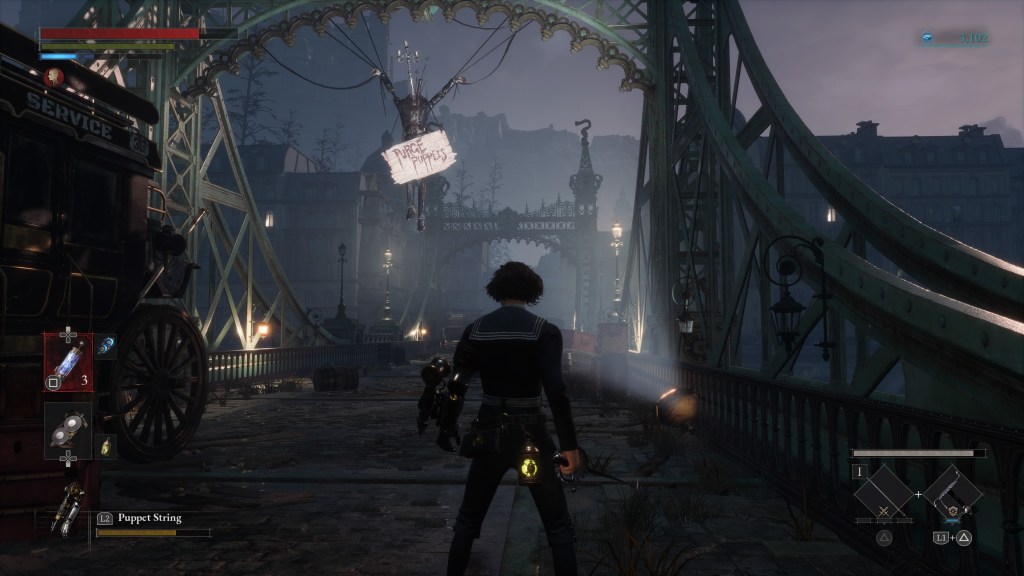
Trust me, I wish I loved Lies of P. At first, I honestly did. Making my way to Hotel Krat amid the dawn of Puppet Frenzy, a mysterious malfunction turning all Krat’s mechanical public servants into malicious husks, had me very excited for what was to come. Crossing guards staggered around with stop signs still stuck in their grip, foreboding officers beat me down with batons and even puppet puppies tried chewing me up. Human bodies littered the cobblestones, victims of the very creations they relied to maintain safety and order. The quest to find Gepetto and make sense of this massacre was an intriguing one. What happened and why? Before I could find out, I had to make it through Parade Master, the game’s first boss battle that incidentally remained one of my favorites by the end. The fight is teased in the form of a collectible bulletin found just before entering the arena. The advertisement boasts that Parade Master has many impressive functions including “16 jolly songs,” “cheerful laughter,” “the strength to carry 6 men on his shoulders” and the ability to perform “dances to delight children.” These ironic descriptions entertained and excited me for what was to come. The fearsome, festive Parade Master, with his comically thin top-hat, large mustache and glowing red eyes, was a lot of fun to discover and defeat. By this point in the game, I was sure Lies of P had plenty of its own charm and character to sufficiently capture my attention. I was partially correct.
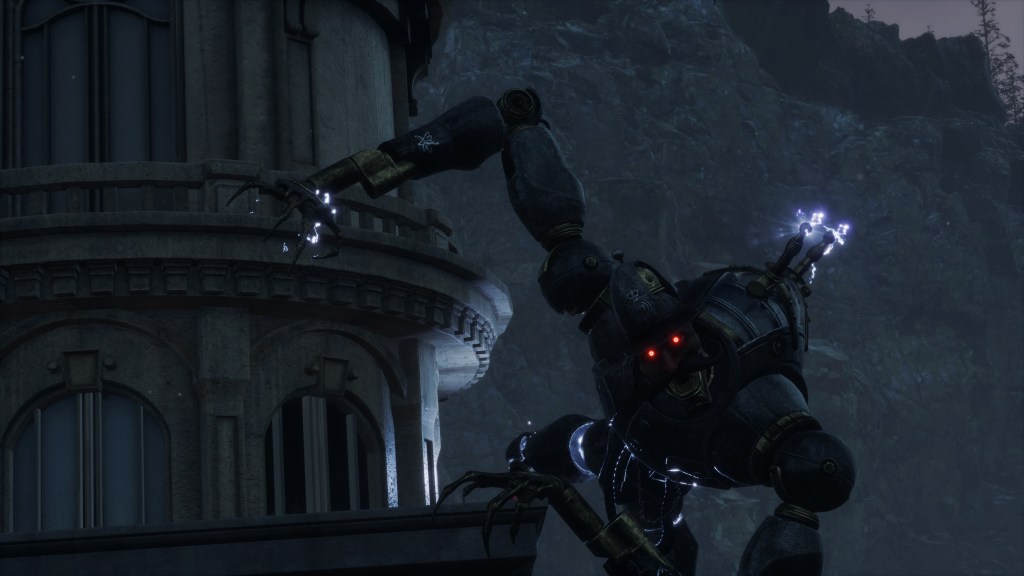
Boss reveals continued to be exceptional as the game progressed. Whether it was the Scrapped Watchman clinging to the side of a building like a giant spider while his head spun upside down or the King of Puppets becoming infuriated after his offer to share a dance gets rejected, I was usually cracking a smile at the creative displays before each showdown. Adding to my appreciation of Neowiz’s thorough artistic direction were the abundant details present in the environments I passed through, especially in different blocks of the city where the effects of Puppet Frenzy and the Petrification Disease (caused by tainted Ergo, the strange mineral substance used to power Krat’s puppets) were made most evident by their juxtaposition to pockets of preserved architectural elegance. Areas outside and underneath Krat weren’t filled with as much to admire.
Because the game is based on a fairytale, the whimsical nature of the source material shines through in both comforting and unsettling ways. For instance, whenever the player reaches and interacts with a Stargazer (Lies of P’s bonfires or lamps), the words, “Stargazer Activated” appear on the screen in a mystical font, reminding you that the blue-haired fairy called Sophia is always guiding you in your quest to save Krat. On the other hand, there are plenty of NPC’s clad in animal masks who will become hostile when you speak with them. The first you’ll encounter is Mad Donkey as he attempts to smash through a stranded Gepetto’s carriage doors and vengefully kill him for his presumed failure in preventing the Puppet Frenzy. The animal masks are obviously meant to replace actual talking animals from the original tale, but there is still something uncanny and surreal about them, to the point where you forget there’s a human being underneath and begin to only see creepy humanoid foxes, cats, donkeys, ect.
Clearly, a lot of effort went into the narrative and visual presentation of Lies of P. While each of the aforementioned elements help the game bob above the waters of imitation, I still could not shake the feeling that I was basically playing a FromSoftware title. Yes, Krat is similar to Yharnam in terms of the historical era each city represents, as well as in the way both cities have been ravaged by pestilent disasters of unknown origin, but it’s not the setting that most contributed to my frequent reflections on Lies of P’s peers. It would be silly to say there isn’t enough room for another soulslike in the 1800’s. Unfortunately, having to interact with certain gameplay mechanics ripped straight from superior FromSoftware games is what finally made me realize that I may be dealing with a mishandled attempt at bringing something truly unique to the table.
Lies of P includes an option to roll without lock-on, though the primary means of dodging attacks comes in the form of a lunging step, like in Bloodborne. I could tell something about the dodge was askew during my deathmatch against Parade Master. It’s a bit floaty and doesn’t cover as much distance as it does in Bloodborne. Consequentially, the amount of i-frames available are less than I anticipated, creating a strict evasive window that wouldn’t feel as unnecessary if not for many bosses having the ability to swing their weapons or appendages in such long-running flurries that it becomes an unreasonable task to avoid each follow-up with a minimalist maneuver. When primarily using the step-dodge, I was reminded of Elden Ring’s imbalance between the speed and stamina of enemies and the player, which, in my opinion, held that game back from surpassing its predecessors that carefully upgraded player control and enemy AI in a way that increased intensity without sacrificing functionality. One of those predecessors is Sekiro: Shadows Die Twice, which implemented deflections as the most effective means of warding off incoming blows and chipping away at enemy poise. Sekiro did away with a stamina bar and the dodge roll so as not to interfere with the extremely precise and engaging new challenge they had in store for players. FromSoftware’s palpable confidence in these decisions was the reason Elden Ring’s return to the same old roll disappointed me (especially considering the unendingly spastic behavior of almost every boss in that game).
The reason I really wanted to bring up Sekiro is because Lies of P also adopts that game’s parry system, or at least tries to, suggesting to players that they need to dodge, block and deflect in rotation if they want the best chance of survival. At first, I was applauding Neowiz for providing me with alternative defensive actions that I could mix and match as I pleased. However, it soon became evident that deflections are just about mandatory in many situations, because bosses will either strike in combos that are too long to dodge/block with limited stamina, or with dangerous “Fury Attacks” that briefly turn their bodies red right before impact, signifying that these attacks can only be deflected (technically they can be evaded too, but only by running away or rapidly dodging to create a huge gap of space, which does nothing to put the player in a counter-offensive position). One of the issues is that the parry window is far stricter than the already small dodge window. I often wondered if my input was registering when I thought I’d nailed a parry but only received an empty health bar in return. Speaking of returns, Lies of P doesn’t reward successful parries with anything other than protecting the player from taking damage. The thrill of deflecting Fury Attacks is greatly reduced when it leads to nothing except not dying. This makes the player feel like they never have the upper hand. Neowiz seems to forget or not care that those glimpses of hope, the brief moments in boss battles where victory is conceivable without dozens of more trial-and-error attempts, is what pushes player through dozens of more trial-and-error attempts! If I feel as though I am fighting the design of a game more than its enemies, I hesitate to consider the game legitimately difficult as opposed to annoying.
Okay, I lied. Parries will eventually reward you by priming a discouraged enemy for a damaging stagger. After a high enough combination of attacks and deflections, an enemy’s health bar will become outlined in white. This means that a landing a heavy attack within an invisible time limit will stun and expose them to a critical attack. There is no way to know how many parries and/or attacks are required to put an enemy in jeopardy, which I initially disliked. Eventually, I appreciated the high-stakes sense of exciting unpredictability that hiding a boss’s state of stability provides (kind of like how Slave Knight Gael can get randomly stunned during the final battle in Dark Souls 3, which saved my life on numerous, R1-spamming occasions), yet there is one reason I can’t get entirely on board with this design, and that’s the requirement of a heavy attack to complete the stagger process. Bosses won’t go any slower when they become fragile, but instead behave the same way. Meanwhile, you’ll feel the pressure to land a heavy attack before the opportunity is gone. This naturally causes many deaths at the hands of haste. What’s worse is that P has no poise, so even if the start of a slow heavy attack lands on the boss, you can be smacked right out of performing the rest of it. Does that mean the boss needs to be hit by the entire heavy attack animation? No, just the end of it. Knowing this, I was able to space some of my more time-consuming stagger attacks in a way that caught the boss in motion, so that I didn’t have to stand right in front of them while waiting for P to wind up (it’s also worth noting that keeping a weapon on hand with quicker heavy attacks is a smart idea, if not a bit restrictive). Even so, what does this add to the game other than an arbitrary extra step before doing a bit of extra damage? The tease of barely missing stuns against punishing bosses stops being cute after it happens repeatedly, causing me to look sideways at P’s non-existent poise and wonder what I’m actually getting out of dying over and over to hard-to-read Fury Attacks.
So, does Neowiz offer any exclusive soulslike mechanics to Lies of P? If I said no, I’d grow the long nose of a biased FromSoftware fanboy (I promise I’m objective in my coverage. . . but they are the best at this, don’t you agree?). There are a few things I really enjoyed about Lies of P that aren’t offered anywhere else in this genre, as far as I know. The ability to create your own weapons from the blades and handles of those you discover is an interesting system that mixes up the stat values and movesets of your arsenal, allowing for more options in whatever build you’ve chosen. These creations are easy to reverse as well, so you’ll never have to regret experimentation. I ended up being quite impressed with just how much some of my combinations assisted me in conquering difficult challenges, like when I carved up a few bosses with an electrical pizza cutter that accommodated technique and advance scaling. I also appreciate possibility that some of my ideas may have been overlooked by a lot of other players, adding to a sense of true uniqueness in my playthrough of the game.
Another feature I’d like to credit Neowiz for is the chance to refill depleted Pulse Cells (aka Blood Vials or Estus Flasks) by landing hits on an enemy. This tempts the player to either be more aggressive or tentative as they struggle to earn another heal. There weren’t many occurrences where this mechanic assisted me in defeating a boss, because by the time I thoroughly learned each fight, I could typically finish with at least one unconsumed Pulse Cell. However, it did help with the process of learning the bosses and does provide those glimpses of hope that I criticized the game for barely including earlier. Finally, the Puppet Arm (which is conceptually comparable to the Shinobi Prosthetic in Sekiro) adds optional assistance during combat that can be easy to overlook for how supplementary it is in the grand scheme of things. Several of the available arm attachments can be used to inflict elemental damage on an enemy, like shooting acid or fire at them. There’s also a shield which did mitigate some of the frustration from failed parries, as it provides a wider parry window but also takes a couple of crucial seconds to deploy. The most inventive arm is the Puppet String. This is acquired quite early in the game and allows P to either pull enemies toward him or pull himself toward enemies. Upgrade it enough and P will even initiate a powerful aerial attack after grappling onto crazed puppets and diseased monsters. I genuinely had fun strategizing with the Puppet String. I used the other arms only out of necessity against certain enemies with low elemental resistances.
Believe me, I don’t think Lies of P is a bad game. It’s beautiful to look at, runs smoothly, provides a decent story to enjoy/shape and includes several memorable boss encounters like King of Puppets, Laxasia, Parade Master and Scrapped Watchman. However, this is a well-funded soulslike game being sold for $60. Therefore, Neowiz is in direct competition with FromSoftware, the tops dogs in the genre. The fact that many of FromSoftware’s ideas have been remixed and redelivered without the same level of precision and/or consolation for lapses in precision is what highlights just how closely Lies of P follows a very familiar blueprint. If you look real hard, you’ll realize that a studio with less experience is indeed at the helm, which doesn’t dismiss the game in any way, but does dismiss some of its parallels to instant classics that are still more fun to play like Bloodborne and Sekiro. Put it this way: if there was ever a time to announce Bloodborne 2, it’s right now, because I think Lies of P might have some people forgetting how high of a standard FromSoftware set with their gothic trip through a plague-ridden Yharnam. I love seeing gaming genres grow and passionate studios get praised for their work. I can recommend Lies of P to anyone who can’t get enough of the soulslike genre, but I can’t honestly say that this game doesn’t feel like an imitation to a noticeable degree, rather than a product fueled by inspiration and innovation. If every aspect of the game was more finely tuned, my opinion may have been different, but many small missteps add up to an experience I’m not all that interested in having again. I’ll have a far better experience adding to my 228 hours in Bloodborne. But hey, that’s just me.
 GotMeThinkingGames
Leave a comment