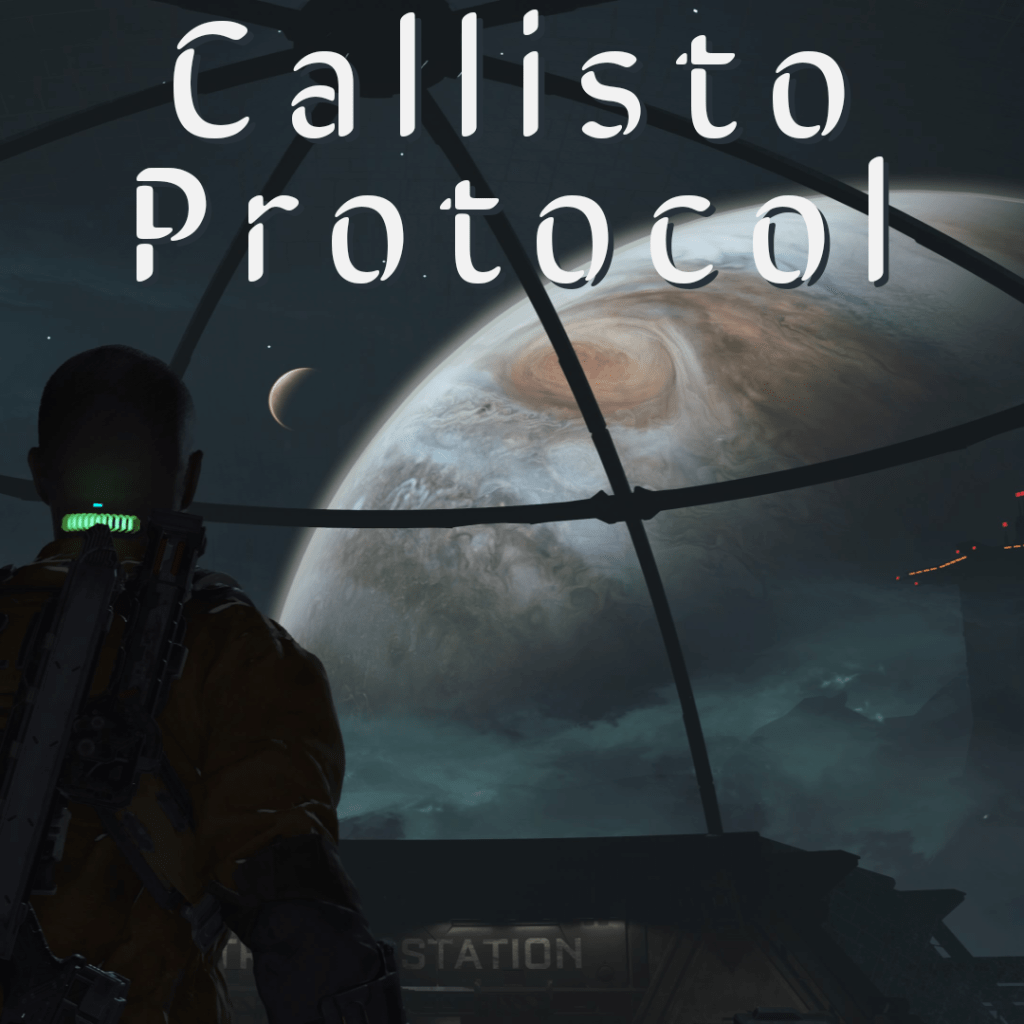
Callisto Protocol got me thinking about the context of player perception.
When I say context, I’m referring to various circumstances that can influence somebody’s initial judgements of a game, such as player mood, post-release updates, marketing campaigns, the initial price and subsequent price reductions of a title as well as relevancy and recency. Videogames are more malleable now than ever before, as developers can reply on post-launch patches to address complaints and critiques rather than making sure all the kinks are worked out in advance. Before modern consoles enabled so many work-in-progress releases, the only way for creators to fine-tune their projects was with brand new editions of their games. On one hand, immediate tweaks and fixes are a convenient way to ensure the smoothest experience possible for a player base. On the other hand, the promise of being able to address problems later rather than sooner can also cause publishers to push games out the door that have no business charging consumers a full $40, $60, or $70 dollars. Expensive games that appear unfinished will always draw the ire out of frustrated fans and critics (rightfully so), especially if transparency during the marketing process was lacking and players feel misled. In many cases, the initial wave of criticism can crumble a game’s reputation and discourage or outright prevent developers from making an attempt at redemption. That’s because so many people are concerned about what’s happening right at this very moment. Once that moment passes, it’s onto the next hype-train. In response to this, most mainstream reviewers dedicate themselves to immediately playing every big title as it releases, then rushing their reviews out in a race for views on their opinionated feedback, never to look back again. There’s nothing necessarily wrong with that, as I’m sure many gamers who create reviews for a living have learned to skillfully manage their time in a way that allows them to honestly engage with the subject at hand and provide thorough analyses. Still, I personally can’t imagine forcing myself to constantly play games on day one without naturally forming some degree of spite when I inevitably don’t feel like playing, let’s say, a superhero game as soon as Spider-Man 2 releases. I prefer to bide my time and wait until the mood strikes me. This patient and organic approach to gaming guarantees that the verdicts I dish out are always coming from the mind of an eager and optimistic gamer who many times misses the contextual elements that have already negatively affected the general opinion of a release. With that being said, let’s see if Callisto Protocol left a better impression on me than it did on many other reviewers when it debuted back in December of 2022, or if the context of the situation didn’t make much of a difference this time around.
Ever since creating this blog, I’ve noticed that I talk about Resident Evil a lot, even when I’m not directly covering the series. Well, I’m about to do it again, only I’ll skip over the part about how much I enjoyed the Resident Evil 2 remake and get right to the Resident Evil 3 remake, one of Capcom’s more controversial titles in recent memory. When the Resident Evil 3 remake was announced, my excitement was through the roof. Given how well Capcom had already recreated parts of Racoon City, the R.P.D and Mr. X (visually and functionally speaking) I was positive that Nemesis and the weblike downtown areas of Raccoon City from the 1999 original would be gloriously updated for 2020. However, the linear, condensed map and rigid scripting of each Nemesis encounter greatly outweighed the strong allure of the game’s appearance (kudos to the RE engine), forcing many fans and critics to call Capcom out on the presence of cash-grab characteristics in what should have been another impressive recreation of a beloved classic. It was because of this early criticism that I stayed away from the game for almost a year. See, I had already platinumed the Resident Evil 2 remake only months prior to the Resident Evil 3 remake’s rushed release, so I wasn’t nearly as hyped to have a very similar survival horror experience so soon. Also, when I saw so much negative backlash, I was simply reluctant to watch one of my favorite games from my past be disgracefully exploited. I concluded then that maybe spending $60 to immediately play the game wasn’t in my best interest, when I could spend the same amount of money on multiple games from genres that I was, at the time, more in the mood to play anyway.
So, I bided my time and cleansed my palette. Months later, I bought the Resident Evil 3 remake on sale for $20. I was prepared for a shorter experience resembling a DLC. Surprisingly, the parallels between expectation and reality didn’t bother me. The reduced price of the game was a contextual factor that help fend off what would have undoubtedly been more frustration with the squandered potential of the game had I paid the same $60 as reviewers and die-hard fans. The smooth, strategic gameplay was nearly identical to the Resident Evil 2 remake, except Jill was also able to evade lunging zombies and other creatures (including Nemesis himself) by rolling at the last moment, which at first felt clunky but then became progressively more rewarding as the game went on. The cutscene-laden linearity of the game was certainly disheartening, as player agency was stripped down and almost entirely eliminated during several sequences. However, because the cutscenes are skippable and the game is constantly propelling you forward, the entire experience functions as even more of a speedrun challenge than the previous title. I suppose my appreciation of the Resident Evil 2 remake’s respect for the original may have softened the blow of the Resident Evil 3 remake’s preoccupation with shallowly capitalizing off the franchise’s legacy. It could also be that the modern gaming industry’s consistency in being inconsistent has prevented me from getting my hopes too high for any new release. After the success of the Resident Evil 2 remake, it was unfortunately unrealistic to expect another gem to come so quickly. Realizing this, I was more willing to accept Jill’s story for what it was (that willingness could be part of the problem, but I honestly think the trajectory of the industry is irreversible at this point). I ended up replaying the game over and over until I attained the platinum trophy. Despite all the unnecessary edits, a neutered Nemesis, a cockier, less likeable Jill Valentine and the reduction of meaningful nooks and crannies to discover while traversing alternate paths, I couldn’t deny that I was having fun hunting the perfect run. This weird, experimental version of Jill’s journey through Raccoon City was able to hook me in for a considerable amount of time as I sped through it faster and faster, enjoying the action along the way. Do I think it could have been a lot better? Of course, but the important thing to note for the sake of this analysis is that had I pushed myself to purchase and play the game on release, after I had already over-saturated my brain with the Resident Evil 2 remake, my reception of the game would most likely have been a lot more pessimistic and scrutinizing. The context of my experience with the Resident Evil 3 remake reshaped my outlook on it, allowing me to overlook a lot of core issues that understandably irritated many players.
Fast forward to October 2023. I check the PS Plus Essential monthly games. Weird West. . . never heard of it, but Devolver Digital has a good reputation as a publisher, so I might check it out in the future *added to library*. Farming Simulator 22. . . good one, Sony. Callisto Protocol. . . wait a second, I recognize that name. . . oh yeah, the Dead Space clone from the Dead Space guy that came out right before Dead Space. I think everyone pretty much agreed that this was a dud, but now that the dust has settled, the updates have rolled in and the game is free of charge, I’ll give it an honest shot *added to library*.
When I say, “Dead Space guy,” I’m referring to Glen Schofield, the co-creator and director of 2008’s Dead Space. Schofield succeeded in turning a sci-fi twist on Resident Evil 4 into its very own instantly recognizable franchise featuring an iconic-looking space engineer named Isaac Clarke, grotesque enemies dubbed Necromorphs that must be killed by way of dismemberment, futuristic abilities with in-universe applications like the time-slowing Stasis and the long-distance control of objects called Kinesis as well as a massive and memorable ship where the nightmare takes place: the Ishimura. I remember watching an interview with Schofield years ago, before anyone knew that Visceral Games, the studio responsible for the development of Dead Space and its two mainline sequels, was to be swallowed whole by the big, bad publisher, Electronic Arts. Schofield seemed so passionate about Dead Space and generally knowledgeable about what makes certain games so captivating. Once Visceral Games was gone, I never saw another interview with him. Schofield had since worked on several Call of Duty titles, but as somebody who hasn’t played Call of Duty since the first Black Ops, I couldn’t care less. So, imagine my surprise when I saw Schofield pop up in the limelight once again, promoting another horror game that takes place in space. Had I accidentally been sucked into some kind of time loop? Was it 2008 again? No, it wasn’t, but somebody never gave Schofield the memo, because here he was marketing a game that looked eerily similar to Dead Space, relying on superficial tactics like scanning Josh Duhamel’s celebrity face for the lead role and showing off how much they could make his model sweat to stir excitement. Nevertheless, I found myself taking the bait. The game looked interesting enough and I hadn’t had a Dead Space fix since the last generation. This appeared to be the closest I’d get to having that fix without digging my PlayStation 3 out of the basement. But then something quite ironic occurred. The Dead Space remake was also announced, set to release approximately two months later. What were the chances?
When the first reviews of Callisto Protocol rolled in, I began to set my sights on the Dead Space remake instead. Why settle for an inferior imitation when I could have the real thing? After playing through EA’s revised take on the Ishimura disaster, I wasn’t in the mood for Callisto Protocol anymore. The Dead Space remake had impressed me with its flawless presentation, overhauled weaponry and much better zero-gravity controls that eliminated the frustration and/or boredom of numerous sections of the original game. Certainly, Callisto Protocol wouldn’t be able to compete with the resurrected master. At least that was my assumption based on all the contextual evidence laid out in front of me, including Callisto Protocol’s apparently poor optimization, basic, bland combat and uncompelling story. But assumptions aren’t real critiques. To know for sure if Callisto Protocol was worth my time, I had to play it. Thanks to PS Plus, that’s what I did.
The set-up for Callisto Protocol is quick and predictable. You play as Jacob Lee in the year 2320. Jacob is essentially a futuristic truck driver, though instead of driving a truck he’s flying a freight-ship alongside his co-pilot, Max. As the two discuss their agreed-upon retirement after one last delivery, we hear news reports on the radio about a fearsome terrorist organization called the Outer Way. Surely nothing bad will happen right before Jacob and Max can retire. . . it’s not like they’ll be, oh, I don’t know, boarded by the Outer Way and forced to crash-land in proximity of Black Iron Prison, where they’ll then be booked as prisoners against their will. . . Look, I’m not too picky when it comes to stories in a videogame, but the introduction of Callisto Protocol does come across as a bit half-assed, especially if you stack it up against the masterful introduction of Dead Space, which allowed players to witness the Necromorph outbreak on the deserted Ishimura first-hand. The intro of Dead Space contributes a lot more to world-building, tension, characterization and excitement for what’s to come than Callisto Protocol achieves with its formulaic excuse to thrust Jacob into a precarious scenario. As the story played out, I remained firmly unsurprised. The prison is plunged into chaos as some kind of disease begins turning inmates into monstrous creatures. Jacob manages to escape his cell and team up with another surviving convict named Elias (by the way, Max didn’t survive the crash, a sad fact that’s used for jump scares whenever Jacob occasionally hallucinates). Together, Jacob and Elias must try to escape Black Iron Prison while becoming gradually more curious as to what’s truly taking place behind the scenes.
So, with the standard plot points all lined up and ready to go, what else did the game do to keep me engaged? Let’s talk about the combat. Callisto Protocol throws a curveball at players expecting some minor spin on Dead Space’s gunplay by favoring melee combat instead. I saw a lot of complaints concerning the recycled rhythm of this melee system, which involves smacking infected foes with a pipe, dodging their counter-swings by flicking the analog stick in one direction or the other and then smacking them some more until they’ve been smashed to pieces. While it does undeniably become repetitive, I tended to enjoy battering enemies and sliding out of harm’s way with the responsive dodge. There are also several long-range options available, though none with the unique advantages of the Dead Space arsenal, which provided the player with many two-in-one weapons like the flamethrower that can damage over time or act like a grenade launcher when its alt-fire is used. Callisto Protocol includes a standard pistol, shotgun, a bigger shotgun and an assault rifle. These aren’t meant to be used on their own. The idea is that the player will use melee combat to weaken enemies and provide openings to then lay down some firepower and finish them off. I found the most satisfying strategy was to shoot, swing and shoot some more, because it sped up the process a little and simply felt more fun. It’s also worth noting that Kinesis makes a comeback (is comeback the right word here? I know Callisto Protocol is supposed to be a separate entity from Dead Space but come on, Glen). Jacob wears a Gravity Restraint Projector, or GRP, which is a glove that provides him with the *totally not* Kinesis ability. Its implementation is more basic than in Dead Space, not necessarily for the way it’s designed as a gameplay element but rather for the simplistic nature of the level and enemy design. It’s extremely easy to take control of a charging enemy from a distance, then throw them into several spiked wall mounts or grinder machines scattered throughout the prison. The directions are clear as soon as you enter a room with such intimidating décor: throw the ugly monster into the big, sharp thing. What I enjoyed most about using Kinesis in Dead Space was picking up enemy limbs and explosive containers on the fly when my ammo ran low and I began to panic. There weren’t nearly as many opportunities for Isaac to annihilate everything on screen by tossing them into the same gigantic murder device. However, despite not asking much from the player in terms of overcoming a challenge, the GRP keeps things more interesting than they would have been without it, as switching between guns, melee and gravity manipulation can mix up the typical routine, as long as you’re making an effort to do so. The combat wasn’t terrible, and I do respect Schofield and company’s attempt to add something new to the game they’re imitating. Although it may have overstayed its welcome thanks to repetitive enemies that are all defeated the same way, I don’t consider the gameplay to be as bad as many.
From what I can tell, combat hasn’t changed much since release. Therefore, that’s the least contextual element of my review. The best example of context is the game’s performance, which by all accounts suffered greatly when the game debuted. Obviously, trying to get through a game that stutters and crashes regularly will be enough to piss off anybody who bought it for $60. But that’s what I’m here for; a gamer on a budget who doesn’t feed into the hype. . . usually (check my Lies of P review). Now that Striking Distance Studios has done their best to polish their heavily marketed release, how does it run? On a PlayStation 5, it ran just fine. But there’s a catch. At some point during development, Schofield and his team must have noticed that their focus on creating such realistic animated celebrities with realistic, over-abundant sweat constantly pouring off their realistic faces was taking a toll on the game’s optimization. Their solution was to stuff the game full of hidden loading screens, which appear in the form of Jacob sloooooowly climbing a ladder, slooooooowly squeezing through a gap in the environment and slooooooowly crawling through Black Iron Prison’s ventilation system. There are so many vents, especially in the first three quarters of the game, that I couldn’t help making strange, unintelligible noises resembling some combination of laughter, groaning and crying whenever I had to enter another one. The worst part is that the gameplay in between these animated loading screens was always very brief. If Callisto Protocol was a person, then they wouldn’t be able to jog to their own mailbox without huffing and puffing for thirty seconds afterwards. This is the number one reason why addressing the shoddy performance of the game makes pretty much no difference, since the promise of bad performance is embedded within the game’s DNA.

Slogging through such a standard story that’s been done a hundred times before is not at all worth putting up with so many excuses to kill the game’s momentum. In other words, it seems Striking Distance Studios obsessed over the cinematic appeal of their game rather than its functionality. In my opinion, that’s always a big mistake. It’s an even worse mistake when the studio is ill-equip to deliver the same level of cinematic expertise as current heavy hitters like Santa Monica Studios. For all the complaints I had with God of War: Ragnarök, it still goes down as an impressive technical achievement. Callisto Protocol does not. Sure, it looks nice, but at what cost? Black Iron Prison is nondescript and cluttered. The level design is extremely generic and the whole game is plagued by yawn-inducing crawling, shimmying and climbing sections. To top it off, there’s a totally random on-rails segment that sees Jacob sliding through the prison’s vast sewer system. The player must tilt the analog stick to avoid obstructions until the segment is over. It’s something that belongs in 2010, when scripted sequences were all the rage thanks to Uncharted, except Uncharted games were not only written with several of these set-pieces in mind, but also found a way to turn them into actual spectacles that the player could immerse themselves in as Nathan Drake. There is no room for such a dated concept in Callisto Protocol, as it adds nothing to the game and is completely out of character. It’s not the segment itself that bothers me so much, but instead Striking Distance Studio’s presumed assumption that no one would notice or care how ham-fisted their solution to a lack of excitement in their game would appear.
By the time the 8th and final hour of Callisto Protocol had arrived, I was more than ready to be done with it. Finding 3 bullets for my gun in a box on the floor, beating up some bad guys, climbing through a vent and repeating the same exact series of events ad nauseum was enough to make me beg for the end. The game simply has no personality or grasp on what it takes to engage modern players who have experienced such titans of the sci-fi horror genre like Dead Space. That’s ironic, given Glen Schofield’s direct involvement in Callisto Protocol’s creation and development. You’d think he would have known that this shadow of his stolen masterpiece wasn’t going to cut it. Now, Schofield is no longer at Striking Distance Studios. I’m not sure of the details regarding his departure, but it’s obviously related to the failure of Callisto Protocol and comes across as a man giving up on revolutionizing the genre that he already revolutionized once. You can’t win ‘em all. On that same note, I can’t love ‘em all. My ultimate, lofty goal is to praise every game I play. A lot of the time this means that I wait for the perfect moment to jump into a game I either missed or otherwise avoided until I was in the mood for it and/or willing to pay a certain amount of money to play it. That’s my idea of giving a game the best possible chance at success in my own mind. The Resident Evil 3 Remake was saved by my patience, and I wished the same for Callisto Protocol. However, sometimes no amount of post-launch updates or price reductions can salvage a game that went through such an off-kilter design full of misguided priorities and poorly aged conventions. I made the right choice in trying Callisto Protocol, because it allowed me to see some of the foundational missteps that stand in the way of a game’s reception no matter how accessible it may become.
 GotMeThinkingGames
Leave a comment